
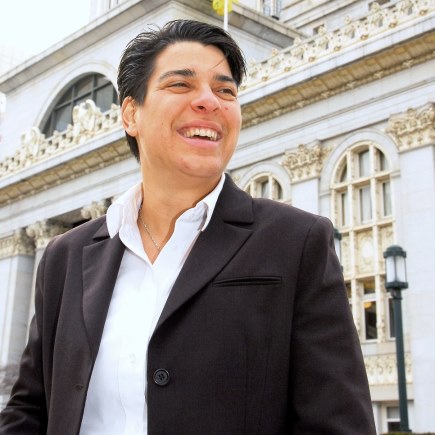
Today is Election Day in California, but most voters are focused on the November races. And nowhere are the stakes higher than in Oakland, a city at the crossroads that could go in very different directions depending on the next mayor
When I last wrote about the Oakland mayor’s race, I felt Mayor Jean Quan had put herself back in position to win after appointing the very popular and highly skilled Fred Blackwell as City Administrator. But Blackwell soon left the position. This left Quan as vulnerable as ever and likely encouraged progressive Councilmember Rebecca Kaplan to enter the race.
Oakland’s Future at Stake
Oakland is at a crossroads. And the 2014 Oakland mayor’s race reminds me when San Francisco was in a similar position during the 1979 mayoral election.
As 1979 began, San Francisco’s gentrification process was in full swing. There was no rent control or just cause eviction laws limiting tenant displacement. When activists put a strong rent and eviction control measure on the ballot, Mayor Feinstein and the Board of Supervisors passed a watered down measure that effectively defeated the ballot initiative but did little to protect tenants.
Progressives helped elect liberal George Moscone in 1975, but after his killing in 1978 and replacement by Feinstein, the city’s left entered the critical 1979 mayor’s race without a candidate. Incredibly, at a moment when a mayor who would support strong tenant protections and development restrictions was most needed, the left was in too much disarray after Moscone’s death to field a strong candidate who could challenge Feinstein.
Feinstein went on to defeat the even more conservative Quentin Kopp in the 1979 mayoral runoff. And she spent the next several years vetoing vacancy control bills, facilitating the statewide preemption of rent control on vacant apartments in 1996.
San Francisco would be a more affordable city today had it elected a progressive mayor in 1979. And as Oakland faces challenges over rising housing costs, crime, and budget shortfalls for public services, it needs to elect a mayor who can steer the city on a course that promotes change while preserving the city’s positive legacies.
Kaplan’s Impact
I asked a veteran Oakland political activist a few months ago why Rebecca Kaplan had not entered the race. They replied that there was no reason for her to announce her candidacy until the August deadline approached, as it preserved her money and would create a level of excitement caused by a last-minute entry (recall Matt Gonzalez galvanized his base by waiting until the last day to file papers in San Francisco’s 2003 mayor’s race).
Without Kaplan, Dan Siegel and Jean Quan split most of the progressive votes. Siegel wins a group I would describe as the KPFA progressives and labor activists, while Quan gets key union support.
But Oakland is filled with independent progressives who are likely to prefer Kaplan to either Siegel or Quan. And if Kaplan runs many voters who regret picking Quan over Kaplan four years ago have a chance to reverse their mistake.
In the current field, moderate Councilmember Libby Schaaf seems to have a critical portion of the electorate to herself. She rather than Siegel or Quan would be the second choice of many of the other candidates, and this creates a huge edge in a multi-candidate, ranked choice voting election.
Kaplan would cut into Schaaf’s second place votes. She has shown an ability to draw a broad range of voters, and lacks the negatives of other candidates.
I do not know Rebecca Kaplan or her positions on key issues impact Oakland. But her past electoral success shows her candidacy would assist the critical public debate over Oakland’s future.
A Broad Field
Cities always benefit when multiple quality candidates offering diverse prescriptions for the city compete in mayoral races. And Oakland needs a serious debate as never before, because the city’s challenges are not as simple in the past.
When Jerry Brown was mayor, most Oakland voters were just happy to have someone competent in charge. Brown could promote unbridled development with little backlash because most voters were eager to get the city’s economy moving again.
But Oakland now faces concerns that development and those arriving to due being priced out of San Francisco are making the longtime working and middle-class city unaffordable to both. Oakland is also a city where crime remains a citywide concern, as crime statistics showing sharp declines are viewed with skepticism.
Oakland will be a very different city even four years from now. And its direction will largely be determined by the choice of the next mayor.
