
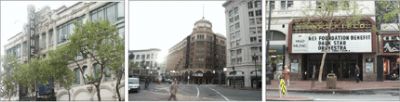
As the gears turn faster and faster on what we’ve dubbed the “Mid-Market Train Wreck”, it’s important to examine who’s been directing this planned hijacking of desperately needed city dollars. Many of the decisions involving the Mid-Market Redevelopment Area have been made by a Project Area Committee (PAC) that supposedly represents the community to be affected by the proposed redevelopment. Yet the PAC is made up almost entirely of organizations and citizens with a direct economic interest in the outcome of the Redevelopment Plan.
The Redevelopment Agency (RDA) formed the Mid-Market PAC in 1997 as a way to create an appearance of community involvement in the creation of a redevelopment plan. This plan will dictate all future development on the Market and Mission Street corridors from 5th to 10th Streets.
The RDA created 38 seats on the PAC. There are some vacancies, so the membership currently breaks down as follows:
Residential Owner Occupants: 3
Residential Tenants: 7
Commercial Tenants: 5
Commercial Property Owners: 10
Community-Based Organizations: 8
The first flaw with this make-up is that the numbers are decidedly skewed towards developers and business interests within the area. The number of votes reflecting residents of the area and the social service organizations who serve them add up to 13, while the votes reflecting business interests add up to 20. This skewing was in part made possible by the seemingly innocuous category of “Community-Based Organizations,” which actually includes representatives of downtown advocates like SPUR and the Market Street Association. For the record, SPUR’s office is located at 312 Sutter St., leaving them a far cry from being members of the Mid-Market community.
The result of this inequality in decision-making: a plan for Mid-Market full of give-aways to developers, including reduced height and parking restrictions and weak standards for affordable housing for all new buildings.
Secondly, the PAC has met incessantly since its inception, holding a series of events any community activist would have a difficult time keeping up with. The constant meetings have meant that organizations that can pay to have representatives attend, such as SPUR, are often in far greater attendance than tenants.
Perhaps most importantly, with the exception of the tenant representatives, every member of the PAC has a direct economic interest in the Mid-Market plan. Business owners want city subsidies for the area to increase patronage and thus revenue, property owners want subsidies to increase the value of their holdings, arts organizations want subsidies to increase attendance at their events, etc.
The problem with this is that these desires do not occur in a vacuum. The Mid-Market Redevelopment Area will affect all San Franciscans. Money used for subsidizing development on Market and Mission will come from the General Fund, and will drain increasingly hard to find dollars from social services, city employees, and other important city services.
This is not to put the blame on individuals or organizations involved in the process. It’s certainly beneficial to have participants like Todco and Tenderloin Neighborhood Development Corporation on board in developing the plan.
But what must be recognized is that almost everyone involved is making decisions that will affect all of San Francisco, yet they are making these decisions based entirely on their own pocketbooks.
Not all of San Francisco have been represented in the planning process, nor will all San Franciscans be able to choose whether this plan is implemented or not. It’s time the Board of Supervisors exercised some leadership and involve themselves with the Mid-Market Plan, injecting some real community representation in the negotiations around the plan. And they should do so soon, before the Mid-Market train wreck occurs and it becomes too late to salvage anything.
On March 9th, the Mid-Market PAC will vote on the current plan and special use district. To voice your concerns, go to http://midmarketpac.org/contact_us.html.
